Category: Uncategorised

  • Corporate Rebrand and Launch Case Study – City Change Management

    Corporate Rebrand and Launch Case Study – City Change Management

    City Change Management: Corporate Rebrand and Launch

    CMS WebsiteDesign – Marketing Collateral – Business Stationery – Merchandise


    Marketing Scenario

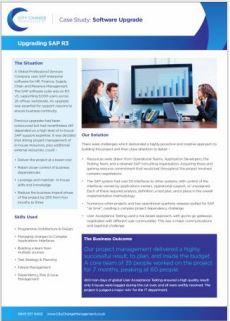
    Spiritas were asked to assist with a full rebrand and launch of this change management consultancy based in London.

    Working with a consultant and the company directors Spiritas created a new identity for the company based on their core values. Whilst working on the design of new case studies and marketing collateral Spiritas also designed and developed a fully content manageable website featuring the new branding.

    Marketing Results

    In the first year since the companies rebrand and launch with Spiritas, they doubled their turnover to £2m.

    If you require a New Marketing-led Website, Logo Design or Merchandise, please call 01293 406000 for FREE expert advice.

  • Why hire a Pay-Per-Click (PPC) Manager?

    Why hire a Pay-Per-Click (PPC) Manager?

    Why hire a Pay-Per-Click (PPC) Manager?

    Your in-house marketing team is great. They’re creative, they work hard, and they get results. But there’s one area where they may not be experts: pay-per-click (PPC) marketing.

    PPC is a complex and ever-changing field, and it takes a special kind of person to stay on top of all the latest trends and changes. That’s where a PPC manager comes in. A good PPC manager will have a deep understanding of how the various PPC platforms work and how to use them to your advantage.

    There are several good reasons to hire a PPC manager, but here are three of the most important:

    1. A PPC manager can save you money
    2. A PPC manager can save you time
    3. A PPC manager can increase your leads and sales

    The benefits of hiring a PPC Manager 

    When you entrust your PPC campaigns to a qualified professional, you can rest assured that your campaigns are in good hands. Here are some of the benefits of hiring a PPC manager:

    1.A PPC manager has the knowledge and experience to create and manage effective campaigns. They will be up-to-date on the latest trends and changes in the world of paid search, and will know how to tweak your campaigns to get the best results.

    2. A PPC manager can save you time. Creating and managing successful PPC campaigns requires a lot of time and effort. If you don’t have the time or resources to dedicate to your campaigns, a PPC manager can take care of everything for you.

    3.A PPC manager can save you money. An experienced PPC manager knows how to optimize campaigns for maximum ROI. They will also be able to identify opportunities for saving money, such as negotiating lower prices with vendors or using negative keywords to reduce wasted spend.

    4.A PPC manager can help you scale your business. If you’re looking to grow your business, a PPC manager can help you scale your paid search campaigns effectively to reach more customers and generate more leads/sales.

    What a PPC Manager can do for your business

    PPC is an advertising model in which businesses can display ads on a search engine or a partner website. When someone clicks on one of these ads, the business pays a small fee to the host website.

    PPC provides businesses with a way to reach people who are already interested in what they have to offer. Because these ads are targeted specifically to people who are already searching for products or services like those offered by the advertiser, they are much more likely to result in a sale or lead than other forms of advertising, such as banner ads.

    A PPC campaign can be very complex, and it takes a lot of time and effort to manage it effectively. This is where a PPC manager comes in. A PPC manager is someone who specializes in creating and managing PPC campaigns. They will have a deep understanding of how the PPC system works and how to get the most out of it for your business.

    A good PPC manager will be able to help you create an effective campaign that targets your ideal customer, allocates your budget efficiently, and track your results so that you can continually improve your performance. This is an important role for any business that wants to make the most of their PPC investment.

    How a PPC Manager can help you save money

    You might think that by managing your PPC campaigns in-house, you are saving money. But the truth is, unless you have someone on your team who is a certified PPC professional, you are likely overspending on your campaigns.

    A good PPC manager will not only save you money, but also improve your ROI. They will do this by:

    -Finding the right keywords: A good PPC manager will take the time to research your industry and find the right keywords to target. Keywords that are too broad will result in a lot of wasted spend, while keywords that are too specific will not generate enough traffic.

    -Setting up negative keywords: Negative keywords help to filter out unrelated searches and prevent your ad from being shown to people who are not interested in what you are selling. This ensures that your ad spend is focused on relevant traffic.

    -Bid management: A good PPC manager will continuously monitor your bids and make adjustments as needed to ensure that you are getting the most bang for your buck. They will also adjust bids based on seasonality and fluctuations in search volume.

    -Ad copy optimization: A good PPC manager knows how to write effective ad copy that will capture attention and encourage clicks. They will also test different versions of ads to see which ones perform best.

    -Landing page optimization: A good PPC manager will work with you to create landing pages that are optimized for conversion. They know how to design pages that are user-friendly and easy to navigate, with compelling call-to-actions.

    The difference a PPC Manager can make 

    While it’s true that anyone can set up and manage a PPC campaign, it takes a special skill set to do it well. A good PPC manager will not only be up-to-date on the latest trends and changes in the world of paid search, but also be able to think outside the box to come up with creative solutions to problems.

    In addition, a good PPC manager will have a deep understanding of your specific business goals and objectives. This allows them to create campaigns that are laser-focused on generating the results you need. And finally, a good PPC manager will have years of experience managing campaigns of all sizes, which means they know how to get the most out of your budget.

    Why you need a PPC Manager 

    You need a PPC Manager because:

    1. They will help you save money.
    A PPC Manager will help you to set up your campaigns in the most effective way possible, so that you don’t waste money on clicks that don’t convert. They will also continually monitor your campaigns to make sure they are performing as efficiently as possible.

    2. They will help you make more money.
    A good PPC Manager will not only help you to save money, but they will also help you to make more money by finding new opportunities for growth and expansion within your market.

    3. They will free up your time.
    Once your campaigns are set up and running efficiently, a PPC Manager will take care of all the ongoing management and optimization for you, freeing up your time to focus on other areas of your business.

    4. They are experts in their field.
    PPC is an ever-changing and complex field, and it takes a lot of time and effort to stay up-to-date with all the latest changes and best practices. A PPC Manager is an expert in their field, and they can use their knowledge and experience to benefit your business.

    5. They will provide valuable insights into your customers’ behavior.
    By analyzing your customer’s behavior, a PPC Manager can provide valuable insights into what they are looking for and how they search for it online. This information can be used to improve your website, products, and overall customer experience.

    How to find the right PPC Manager for your business

    There are a lot of so-called PPC experts out there. But how can you be sure you’re hiring the right person for your business? Here are 8 things to look for:

    1. A PPC Manager Who Understands Your Business
    The most important quality you should look for in a PPC manager is an understanding of your business. A good PPC manager will take the time to learn about your business, your products or services, your customers, and your goals.

    2. A PPC Manager Who Has Experience with Your Industry
    Ideally, you want to hire a PPC manager who has experience with businesses like yours in your industry. They will understand the unique challenges and opportunities that are specific to your industry and will be best equipped to create a winning strategy for your business.

    3. A PPC Manager Who Is Up-to-Date on the Latest Changes in Paid Search
    The world of paid search is constantly changing, with new features being introduced and new best practices emerging all the time. You want to hire a PPC manager who is up-to-date on the latest changes and trends so that they can apply them to your campaign and get you the best results possible.

    4. A PPC Manager Who Knows How to Set Goals and Measure Results
    A good PPC manager will work with you to set realistic goals for your campaign and then measure the results so that you can see whether or not those goals are being met. They should also be able to provide you with regular reports so that you can track your campaign’s progress over time.

    5. A PPC Manager Who Has a Proven Track Record of Success
    When you’re looking at potential candidates, be sure to ask for case studies or examples of their previous work so that you can see first-hand what kind of results they have been able to achieve for other businesses like yours.

    6. A PPC Manager Who Is Transparent About Their Fees and Contracts
    You should always know upfront how much a potential PPC manager charges and what their contracts entail before agreeing to work with them. Be wary of any managers who try to hide their fees or who pressure you into signing a contract before giving you all the details.

    7. A PPC Manager Who Offers a Free Consultation
    A good PPC manager will offer a free consultation so that they can learn more about your business and determine whether or not they would be a good fit before asking you to commit to anything. This is a great way for you to get an idea of their level of knowledge and expertise as well as their communication style before making any sort of commitment.

    At MarketingAction we have over 20 years experience working with PPC Advertising for a large variety of businesses. If you would like to discuss Online Advertising, please do call us on 01293 406000.


    Find Out More About our Online Advertising Packages!


    Read a Case Study!

  • What is Pay-Per-Click Advertising?

    What is Pay-Per-Click Advertising?

    What is Pay-Per-Click Advertising?

    There are a lot of different ways to advertise your business online, but one of the most effective is pay-per-click (PPC) advertising.

    Pay-Per-Click (PPC) advertising is a form of online marketing where advertisers pay a fee each time one of their ads is clicked. Essentially, it’s a way of buying visits to your site, rather than earning them organically.

    PPC is one of the most popular forms of online advertising, and it’s used by businesses of all sizes, in all industries. If you’ve ever seen an ad at the top of a Google search results page, or next to a YouTube video, then you’ve seen PPC in action.

    There are two main types of PPC advertising: search ads and display ads. Search ads are the ones that appear next to search results, while display ads are the ones that appear on websites (often in the form of banners or other visuals).

    PPC can be an effective way to drive traffic to your website, but it’s important to remember that you’ll only be charged when someone actually clicks on your ad. That means that even if your ad is seen by thousands of people, you won’t have to pay anything unless someone actually clicks on it.

    Why Use PPC Advertising?

    Pay-per-click (PPC) advertising can be a great way to attract new customers and grow your business. With PPC, you only pay when someone clicks on your ad, so it’s a cost-effective way to reach potential customers.

    There are many reasons to use PPC advertising, but here are some of the most popular:

    -PPC is an effective way to reach new customers.
    -PPC ads can be targeted to specific demographics, locations, and even times of day.
    -PPC is a flexible marketing tool that can be adjusted to fit your budget.
    -PPC ads are easy to track and measure, so you can see how well your campaign is performing.

    How Does PPC Advertising Work?

    PPC advertising is a form of online advertising in which advertisers pay each time a user clicks on one of their ads. The pay-per-click model is usually used in search engine advertising, where advertisers bid on the keywords that users enter into the search bar. When a user types a keyword into the search bar and sees an ad for that keyword, they may click on the ad and be taken to the advertiser’s website.

    PPC advertising can be an effective way to drive traffic to your website and generate sales, but it can also be expensive if you don’t know what you’re doing. To be successful with PPC advertising, you need to understand how it works and how to optimize your campaigns.

    What are the Benefits of PPC Advertising?

    PPC advertising can be an effective way to drive traffic to your website and generate leads or sales. Here are some of the benefits of using PPC:

    -You can reach a large audience with your ads
    -You can target your ads to a specific audience
    -You can control how much you spend on your ads
    -You can measure the results of your ads

    What are the Drawbacks of PPC Advertising?

    Pay-per-click (PPC) advertising can be a great way to generate leads and sales for your business. However, there are also some potential drawbacks that you should be aware of before you decide to use this type of advertising.

    One of the potential drawbacks of PPC advertising is that it can be expensive. If you are not careful with your budget, you could end up spending a lot of money on clicks that do not convert into customers. Additionally, the auction-based system that is used to determine ad prices can sometimes result in very high costs-per-click (CPCs).

    Another potential drawback is that PPC ads can be difficult to track. It can be hard to determine how much each click is worth in terms of sales or leads generated. Additionally, it can be difficult to tell which keywords or ad campaigns are performing well and which ones are not.

    Despite these potential drawbacks, PPC advertising can be a great way to generate leads and sales for your business. When used correctly, it can be an effective and affordable marketing tool.

    How to Get Started with PPC Advertising?

    Here are the four steps to take:

    1) Define Your Goals
    Before you even start creating your PPC campaign, you need to have a clear understanding of what your goals are. Are you looking to increase brand awareness? Drive website traffic? Generate leads? Make sales? Once you know what your goals are, you can create campaigns that are designed to achieve them.

    2) Research Your Keywords
    Keywords are the foundation of any successful PPC campaign. That’s because they help you determine which search terms you want your ad to show up for. When creating your keyword list, be sure to include both broad and long-tail keywords. Broad keywords are general terms that describe your product or service (e.g., “coffee”). Long-tail keywords, on the other hand, are more specific phrases that include location and/or intent (e.g., “buy whole bean coffee online”).

    3) Set Up Your Campaign
    Once you have your goals and keywords defined, it’s time to set up your actual campaign in Google Ads or another advertising platform. This process will vary depending on the platform you use, but the basics are generally the same: You’ll need to create your ad groups and ads, set up your billing information, and choose where you want your ads to appear.

    4) Monitor & Optimize Your Campaign
    Once your campaign is up and running, it’s important to monitor its performance so that you can make necessary changes/adjustments along the way. Google Analytics is a great tool for tracking key metrics like website traffic and conversion rates. Reviewing these metrics on a regular basis will give you insights into what’s working well and what needs improvement. Based on these insights, you can then make adjustments to improve the performance of your campaign.

    What are the Best Practices for PPC Advertising?

    PPC advertising can be an effective way to drive targeted traffic to your website, but there are some best practices that you should follow to ensure that your campaigns are successful.

    1. Set realistic goals for your campaign.
    2. Do your research and target your audience carefully.
    3. Create high-quality ad copy that is relevant to your target keywords.
    4. Use negative keywords to avoid wasting money on irrelevant clicks.
    5. Track your results and optimize your campaign regularly.

    Conclusion

    PPC is a type of online advertising that allows businesses to pay for their adverts to be shown on search engines, websites and social media platforms. Advertisers only pay when their advert is clicked on by a user, hence the name ‘pay-per-click’.

    PPC can be an effective way to target potential customers who are actively searching for products or services like yours. By carefully targeting your advert, you can ensure that you only pay for clicks from people who are genuinely interested in what you have to offer.

    If you’re thinking of using PPC advertising to promote your business, it’s important to understand how it works and what your options are. This guide will give you an overview of everything you need to know about PPC, from the basics of setting up a campaign to more advanced strategies for optimising your adverts.

    If you are thinking of starting up a PPC Advertising Campaign for your business, please do call 01293 406000 for free expert advice.


    Find Out More About our Online Advertising Packages!

  • Brand Awareness Campaign Case Study – PictureBox

    Brand Awareness Campaign Case Study – PictureBox

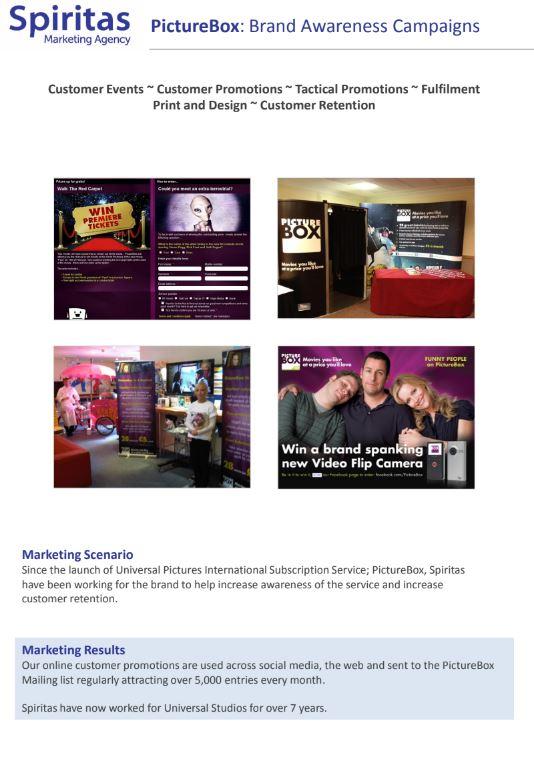
    PictureBox: Brand Awareness Campaigns

    Customer Events – Customer Promotions – Tactical Promotions – Fulfillment Print & Design – Customer Retention


    Marketing Scenario

    Since the launch of Universal Pictures International Subscription Service; PictureBox, Spiritas have been working for the brand to help increase awareness of the service and increase customer retention.

    Marketing Results

    Our online customer promotions are used across social media, the web and sent to the PictureBox Mailing list regularly attracting over 5,000 entries every month.

    Spiritas worked for Universal Studios for over 7 years.

    If you have a Brand Awareness Campaign for your business in mind, please call 01293 406000 for FREE expert advice.

  • How SEO Generates you new Business…

    How SEO Generates you new Business…

    How SEO Generates you new Business…

    If you’re like most people, you probably think of SEO (search engine optimization) as a way to improve your website’s ranking in search results. And while that’s certainly one important aspect of SEO, it’s not the only one. In fact, SEO can be a powerful tool for generating new business leads and customers.

    Here’s how:

    When people search for businesses or products online, they typically use specific keywords or phrases. If your website is optimized for those keywords, it will appear higher in the search results. And when people see your website appearing in the top spot for their search query, they’re more likely to click through to learn more about what you have to offer.

    In other words, SEO can help you attract new visitors to your website who are already interested in what you have to offer. And once they’re on your site, it’s up to you to convert them into leads and customers.

    SEO as a business tool

    SEO is an important business tool that can help businesses generate leads, sales, and brand awareness. However, SEO is not a silver bullet solution for all businesses, and it is important to understand how it works in order to make the most of it. Here are a few things to keep in mind when using SEO as a business tool:

    SEO should be used as part of a holistic marketing strategy: While SEO can be a powerful tool on its own, it works best when used in conjunction with other marketing efforts such as content marketing, social media marketing, and paid advertising.

    SEO takes time to generate results: SEO is not a quick fix solution; it typically takes months or even years to see results from your efforts. Patience and consistent effort are key when pursuing SEO as a business strategy.

    SEO should be tailored to your business goals: Not all businesses have the same goals, and therefore not all businesses will benefit from the same SEO tactics. It’s important to tailor your SEO efforts to your specific goals in order to maximize results.

    If you keep these things in mind, you can use SEO as an effective tool to generate leads, sales, and brand awareness for your business.

    The benefits of SEO

    SEO is important for any business that wants to attract new customers through search engines like Google, Yahoo, and Bing. By optimizing your website for search engines, you can increase your chances of ranking high in search engine results pages (SERPs), which leads to more website visitors and, ultimately, more customers. Here are five benefits of SEO that every business should consider:

    1. SEO Increases traffic to your website
    2. SEO Helps you rank higher in search engine results pages
    3. SEO Leads to better user experience
    4. SEO Increases the credibility of your business
    5. SEO Drives innovation

    How SEO generates traffic

    SEO is the practice of optimizing a website so as to increase its rank in the search engine results pages for certain queries. The main purpose of SEO is to generate organic (unpaid) traffic from Google and other search engines.

    The main methods through which SEO generates traffic are:
    -By ranking for relevant keywords: When your website ranks for relevant keywords, it increases its chances of being clicked by a searcher. If you are selling shoes, ranking for the keyword “buy shoes online” would be a good idea.
    -By appearing in the “Featured Snippets”: Featured snippets are special boxes that appear at the top of the search engine results pages (SERPs). They are designed to give users quick answers to their queries. If your website appears in the featured snippet for a relevant query, it is likely to get more clicks than other websites that rank lower on the SERP.
    -By appearing in the “People Also Ask” box: The “People Also Ask” (PAA) box is a special feature that appears on some SERPs. It contains a list of questions related to the user’s query. If your website appears in this box, it is likely to get more clicks than other websites that do not appear in it.
    -By appearing in the “Related Searches” box: The “Related Searches” box is another special feature that appears on some SERPs. It contains a list of queries related to the user’s query. If your website appears in this box, it is likely to get more clicks than other websites that do not appear in it.

    The basics of SEO

    SEO is short form for “Search engine optimization”. It is a long-term marketing strategy employed in order to improve a websites visibility and organic search results in google and other global search engines. Good SEO practices help websites rank higher in SERP (search engine result pages), therefore generating more web traffic, leads and sales for businesses.

    There are two main types of SEO: on-page SEO and off-page SEO.

    On-page SEO relates to all the measures that can be taken directly within the website in order to improve its position in the search rankings. This includes optimizing title tags, meta descriptions, header tags, images etc.

    Off-page SEO, on the other hand, refers to all the activities that are carried out outside of the website to promote it, such as link building, social media engagement, brand mentions etc.

    On-page SEO techniques

    SEO is the practice of optimizing a website to rank higher in search engine results.

    One way to do this is by using on-page SEO techniques. This means making sure that your website’s content and code are optimized for search engines.

    Here are some on-page SEO techniques that you can use:

    1. optimize your title tags
    2. use keyword-rich Meta descriptions
    3. make sure your website is mobile-friendly
    4. improve your website’s load time
    5. optimize your images

    Off-page SEO techniques

    Off-page SEO (also called “off-site SEO”) refers to actions taken outside of your own website to impact your rankings within search engine results pages (SERPs).

    Although on-page SEO is a important, off-page SEO is what will ultimately lead to higher search engine rankings. On-page optimization deals with the technical aspects of your website that can be controlled by you, such as title tags, meta descriptions, and keywords. However, there are many factors that are out of your control with on-page SEO. These include things like the overall authority of your website, the number of high-quality websites linking to yours, and the overall quality of those websites.

    Off-page SEO is all about building relationships and post pins pointing back to your website from other high quality websites. When done correctly, off-page SEO can lead to higher search engine rankings, increased traffic to your website, and a better overall online reputation.

    Local SEO

    Local SEO is an important marketing strategy for businesses with physical locations. It helps businesses promote their products and services to local customers at the right time and place.

    Search engines use a variety of factors to determine which businesses to show for local searches. Some of these factors include the business’s name, address, and phone number (NAP), as well as the business’s website content, reviews, and citations.

    Businesses can improve their Local SEO by claiming their business listing on directories and review sites, optimizing their website for local keywords, and getting more positive reviews.

    E-commerce SEO

    E-commerce SEO is the practice of optimizing an online store to rank higher in search engine results pages, and thereby drive more traffic and sales. It involves understanding how search engines work and what they look for when indexing and ranking sites.

    There are a number of factors that go into e-commerce SEO, from on-page optimization (like title tags and meta descriptions) to off-page SEO (like link building and social media engagement). A comprehensive e-commerce SEO strategy will take all of these factors into account in order to help a website rank as high as possible.

    While it can be difficult to achieve top rankings for competitive keywords, the rewards can be substantial. A higher ranking means more traffic, which can lead to more sales and conversions. And since e-commerce SEO is an ongoing process, the benefits can compound over time, providing a long-term ROI for businesses that invest in it.

    Enterprise SEO

    Enterprise SEO is the practice of optimizing a website to rank higher in search engine results for keywords associated with the business. The goal of enterprise SEO is to generate more leads and traffic from organic search results.

    SEO is a long-term investment and enterprise SEO campaigns are often multi-faceted.

    I hope this article helped you to understand what is SEO and why it’s important to consider it for your Business!


    Need help with your SEO? Why not Find Out More about our SEO Search Marketing Packages…

  • Exhibition Case Study – Blue Helix

    Exhibition Case Study – Blue Helix

    Blue Helix: Event Marketing

    Stand Builds and Design – Graphics & Artwork – Exhibitions & Events


    Marketing Scenario

    DataCentre World is the UK’s foremost DataCentre infrastructure and equipment exhibition and takes place at the Excel Centre in London. Spiritas were asked to plan and produce the 2015 stand for the 4th year in a row.

    Marketing Results

    Spiritas carried out the following activities:
    • Stand Plan and Project Management
    • Lighting and electrical requirements for various product displays
    • Print and installation for walls and panels
    • Integrated storage and refreshments facilities

    The stand was successfully planned and constructed within the required timeframes. The stand provided an excellent platform for the Blue Helix sales and marketing team to engage with and meet customers at the show as well as new prospects. 

    “ Very pleased, everything went extremely well. Referred Spiritas to other group companies..”
    Marketing – Blue Helix

    If you have Event or Exhibition Marketing requirements, please call 01293 406000 for FREE expert advice.

  • Exhibition Case Study – Legrand

    Exhibition Case Study – Legrand

    legrand: Event Marketing

    Stand Designs – Graphics & Artwork – Customer Promotion – Design and Print – Exhibitions & Events


    Marketing Scenario

    As a key supplier legrand were invited by CEF to attend their customer and staff trade event at NEC Birmingham. The requirement was to design a large stand showing off a number of key products to different audiences over the two day event and engage each audience effectively.

    Marketing Results

    Spiritas carried out the following activities:
    • Stand Plan and Project Management in conjunction with Ocean Displays
    • Simple promotional mechanic to support the Salamandre competition activity
    • Delivery of design, artwork and print requirements

    The stand was successfully planned and constructed within the required timeframes. A simple quiz mechanic was used to encourage stand visitors to explore the stand and visit individual product displays. Critically the quiz mechanic required visitors to take on board key sales features and benefits about the products on show.

    “ The show went extremely well for us and the customer engagement mechanic devised by Spiritas
    along with our competition feature did a great job of increasing product knowledge.”
    Marketing – legrand

    If you have Event or Exhibition Marketing requirements, please call 01293 406000 for FREE expert advice.

  • How a new Website will generate business…

    How a new Website will generate business…

    How a new Website will generate business…

    A new website is like a new business: it needs to be marketed effectively to generate interest and customers. Just as businesses use various marketing channels to reach their target audiences, so too must websites be promoted through a variety of means to attract visitors. Search engine optimization, social media marketing, and email marketing are just some of the ways that a new website can generate business.

    Defining your target audience

    Your target audience is the group of people who are most likely to buy your product or use your service. To find your target audience, you can use market research techniques like surveys, interviews, and focus groups. Once you know who your target audience is, you can tailor your marketing efforts to appeal to them.

    Creating content for your target audience

    The first step in driving traffic to your new website is to create content that is relevant to your target audience. This means addressing the needs and interests of your potential customers, and providing information that is valuable to them. Once you have created this content, you need to get it in front of the people who are most likely to be interested in it.

    There are a number of ways to do this, but some of the most effective include:

    -Search engine optimization (SEO): This involves optimizing your website and its content for the search engines, so that your site appears as high as possible in the search results for relevant keywords.
    -Social media marketing: Share your content on social media platforms such as Facebook, Twitter, and LinkedIn, and encourage your followers to share it with their own networks.
    -Paid advertising: Place ads on Google, Bing, or other popular websites, targeting people who are searching for keywords related to your business.
    -Email marketing: Send emails to people on your list with links to new blog posts or other fresh content on your site.

    By creating targeted content and making sure it is seen by as many potential customers as possible, you can generate a steady stream of traffic to your new website—and convert some of that traffic into paying customers.

    Designing your website for your target audience

    Every website is designed with a target audience in mind. This target audience is the group of people you are hoping to reach with your site. When designing your website, you will want to consider what this target audience is looking for so that you can design accordingly.

    Your target audience may be looking for information about your product or service, or they may be ready to make a purchase. If you are selling a product, you will want to include information about the product on your site as well as pictures or videos. If you are selling a service, you will want to include information about what the service is and how it can help the user.

    You will also want to consider the overall look and feel of your site. This includes the colors, fonts, and overall layout of the site. You want to make sure that your site looks professional and is easy to navigate so that users will stay on your site and continue to come back.

    If you take the time to consider your target audience when designing your website, you will be more likely to generate business from your site.

    Promoting your website to your target audience

    In order to generate business from your new website, you will need to promote it to your target audience. There are many ways to do this, and the most effective approach will vary depending on your industry, target market, and other factors. However, some general tips that can help include:

    – Make sure your website is optimised for search engines so that people can easily find it when they search for relevant terms.
    – Use social media platforms to share links to your website and generate interest among potential customers.
    – Use advertising platforms such as Google AdWords or Bing Ads to reach people who are actively searching for products or services like yours.
    Reach out to relevant websites or blogs in your industry and see if they would be interested in featuring your website as a resource for their readers.

    Generating leads from your website

    If you’re like most businesses, you want your website to generate leads. But how do you make that happen? You need to design your website with lead generation in mind.

    Here are some tips for generating leads from your website:

    Make sure your website is optimized for SEO. This will help your site rank higher in search results, making it more visible to potential customers.

    Include a strong call to action on every page. Tell visitors what you want them to do, such as “contact us for a free consultation.”

    Offer something of value in exchange for contact information. This could be a white paper, e-book, or other resource. Visitors are more likely to hand over their information if they perceive it as valuable.

    Make it easy to contact you. Include prominently placed forms or a link to your contact page on every page of your site.

    Follow up with each lead promptly. The sooner you reach out, the better your chances of converting that lead into a customer.

    Converting leads into customers

    New websites have a lot of potential for generating business, but they need to be designed with conversion in mind. Lead generation is the process of getting people interested in your product or service, and converting them into customers. A new website is the perfect opportunity to generate leads, but only if it is designed with conversion in mind.

    There are a few key things to keep in mind when designing a website for lead generation:

    -Make sure your website is easy to navigate and understand. If people can’t figure out how to use your site, they’re not going to stick around.
    -Include clear calls to action on every page. Tell visitors what you want them to do, and make it easy for them to do it.
    -Use attractive forms and CTAs (calls to action) to capture leads. Give visitors something of value in exchange for their contact information.
    -Make sure your website is mobile-friendly. More and more people are using their phones and tablets to browse the web, so you need to make sure your site looks good on all devices.
    -Analyze your results and optimize accordingly. Use analytics tools to track what’s working and what’s not. Then make changes to improve your conversion rate.

    Analyzing your website’s performance

    In order to ensure that your website is bringing in new business, you’ll need to periodically analyze its performance. There are a number of ways to do this, but some key metrics to look at include website traffic, conversion rate, and time on site.

    Website traffic can be measured using Google Analytics or another similar platform. This will give you an idea of how many people are visiting your site and where they’re coming from.

    Conversion rate is the percentage of visitors who take a desired action on your website, such as making a purchase or signing up for a newsletter. This can be calculated by dividing the number of conversions by the total number of visitors.

    Time on site is the average amount of time that visitors spend on your website. This can be calculated using Google Analytics or another similar platform. A high time on site indicates that visitors are finding your content interesting and engaging.

    Improving your website’s performance

    A website’s performance depends on a variety of factors, ranging from the quality of the content to the way it is designed and coded. By improving your website’s performance, you can make it more user-friendly and attract more visitors.

    Here are some tips for improving your website’s performance:

    1. Make sure your content is relevant and engaging.
    2. Use keyword-rich titles and descriptions to improve your site’s search engine ranking.
    3. design your website using responsive design techniques so it can be viewed on all devices.
    4. Use CSS and Javascript minimally to reduce loading times.
    5. Optimize your images to reduce file sizes without compromising quality

    Growing your website’s traffic

    There are a number of ways to grow the traffic to your website. Here are some of the most effective:

    1. Search engine optimization (SEO). By optimizing your website for the search engines, you can increase your website’s visibility in the organic (or unpaid) search results.
    2. Pay-per-click (PPC) advertising. By placing ads on search engines and other websites, you can reach people who are already looking for what you have to offer.
    3. Social media marketing. By actively participating in social media, you can build relationships with potential and current customers and promote your products and services in a way that is informal and interactive.
    4. Content marketing. By creating and distributing high-quality content, you can attract attention to your website and build credibility with your target audience.
    5. Email marketing. By regularly sending newsletters, special offers, and other communications to your email list, you can stay in touch with your customers and prospects and remind them of what you have to offer.

    All of these strategies can be effective in generating traffic to your website. The key is to find the ones that will work best for you, based on your budget, your audience, and your goals.

    Monetizing your website

    There are a variety of ways to monetize your website, and the approach you take will depend on your business model and goals. Here are a few of the most common methods:

    1. Sell products or services directly from your website. If you’re selling products, you’ll need to set up an eCommerce platform and add product pages to your website. If you’re selling services, you can add service pages and an online booking system.

    2. Generate leads for your sales team. If you’re not ready to sell directly from your website, you can generate leads through contact forms, newsletter signups, or other lead capture forms. You can then follow up with these leads offline.

    3. Advertise on your website. If you have high traffic to your website, you can monetize this traffic by selling advertising space on your site. This can be done through banner ads, text links, or other forms of advertising.

    4. Affiliate marketing is another way to monetize your website traffic. With this method, you partner with other businesses in your industry and promote their products or services on your site in exchange for a commission on sales generated from your site.

    5. Use your website as a platform to launch other businesses. If you have a large audience or following, you can use your website as a platform to launch other businesses, such as an online course, consulting service, or paid membership site.


    Find Out More about our Marketing-Led Website Design…

  • Why your Business needs a Marketing Plan…

    Why your Business needs a Marketing Plan…

    Why your Business needs a Marketing Plan…

    If you’re like most business owners, you probably think that marketing is just about advertising and promotion. But the truth is, marketing is much more than that. Marketing is the process of creating a strategy to reach your target market and achieve your business goals.

    Without a marketing plan, your business is likely to under perform and miss out on potential customers. So if you’re serious about growing your business, you need to develop a marketing plan. Here’s why:

    Defining your marketing goals

    Creating a marketing plan begins with setting marketing goals. Marketing goals are the objectives that you hope to achieve with your marketing efforts. Without defined goals, it’s impossible to measure your success – or even know if you’re being successful.

    There are different types of marketing goals, but they all should be specific, measurable, attainable, relevant, and time-bound (SMART).

    Some common examples of marketing goals include:
    -Generating leads
    -Increasing brand awareness
    -driving website traffic
    -increasing online sales
    -increasing foot traffic to a brick and mortar store

    Knowing your target audience

    As a business owner, it’s essential that you take the time to understand who your target audience is. By definition, your target audience is the group of people who are most likely to buy your products or services.

    If you don’t take the time to understand your target audience, you’re likely to waste a lot of time and money marketing to people who will never buy from you. Worse yet, you might end up alienating potential customers because your marketing materials don’t speak to them directly.

    When you know who your target audience is, you can create marketing materials that are tailored to their needs and interests. As a result, you’ll be much more likely to convert leads into customers and customers into repeat buyers.

    Researching your competition

    Any good marketing plan worth its salt will have a section dedicated to the competition. But before you can write about your competitors, you need to do your homework and conduct a fair amount of research.

    Your first step is to identify who your competition is. This can be tricky, especially if you’re in a niche market or if you offer unique services. Once you’ve drawn up a list of potential competitors, it’s time to start digging for information.

    Here are some questions to help guide your research:
    -What are their strengths and weaknesses?
    -What kind of marketing campaigns do they run?
    -How do they price their products or services?
    -What are their most popular products or services?
    -What is their customer base like?
    -How do they compare to you in terms of size, reach, and resources?

    Answering these questions will give you a good overview of where your competitors stand and what kinds of strategies they are using. This information will be invaluable as you start to develop your own marketing plan.

    Outlining your marketing strategies

    A marketing plan is a strategic document that details your company’s advertising and marketing efforts for the coming year. It outlines your goals, strategies, and budget, and it is what you will use to measure your progress and effectiveness.

    A well-crafted marketing plan will:

    -Identify your target market
    -Define your marketing goals
    -Detail your strategies
    -Allocate your resources
    -Create a timeline
    -Measure your progress

    Creating your marketing budget

    As a small business, you may not have a large budget for marketing. But that doesn’t mean you can’t have a successful marketing plan. You just need to be creative and effective with your use of resources.

    One way to stretch your marketing budget is to create an in-depth plan. By taking the time to research your target market and develop targeted strategies, you can make the most of your limited budget. Additionally, consider partnering with other businesses or tap into free resources such as social media to get your message out there.

    With a little creativity, you can develop a marketing plan that gets results without breaking the bank.

    Scheduling your marketing activities

    One of the key components of a successful marketing plan is setting a schedule for your marketing activities. This ensures that you are consistently working on promoting your business, and that your efforts are aligned with your overall business goals.

    Your marketing schedule should include Regular activities: These are the ongoing activities that you will do on a regular basis, such as updating your website or sending out a monthly e-newsletter.
    One-time activities: These are special projects or campaigns that you will undertake from time to time, such as launching a new product or running a contest.

    Your marketing schedule should be designed to help you meet your overall marketing goals. For example, if your goal is to increase brand awareness, you will want to include activities that will reach a large audience, such as advertising or public relations. If your goal is to generate more leads, you will want to focus on activities that will attract potential customers to your website or business, such as search engine optimization or lead generation campaigns.

    Measuring your marketing success

    As a small business owner, you don’t have the luxury of a large marketing budget or team. You need to be strategic in order to get the most out of your marketing efforts. One way to do this is to create a marketing plan.

    A marketing plan outlines your marketing strategy and goals, and establishes measurable benchmarks to gauge your progress. Without a plan, it’s easy to get sidetracked by shiny objects and new trends. By taking the time to create a focused plan, you can save time and money in the long run.

    Here are some elements that should be included in your marketing plan:

    -Your target market: Who are you trying to reach with your marketing efforts?
    -Your unique selling proposition: What makes your product or service different from your competitors?
    -Your goals: What do you hope to achieve with your marketing efforts?
    -Your budget: How much money are you willing to spend on marketing?
    -Your timeline: When do you want to achieve your goals?
    -Your channels: Where will you reach your target market? (social media,trade shows,email marketing,etc.)
    -Your metrics: How will you measure your success? (website traffic,leads generated,sales converted, etc.)

    Adjusting your marketing plan

    A marketing plan is a vital tool for any business. It’s a written document that outlines your marketing strategy for the coming year. It includes your plans for product development, pricing, promotions, advertising, public relations, and sales strategies.

    As your business grows, so will your marketing needs. You’ll need to adjust your marketing plan to keep up with the changing demands of your business. Here are four tips to help you adjust your marketing plan:

    1. Review your target market. As your business grows, you may need to tweak your target market. For example, if you’re a startup that’s targeting small businesses, you may need to adjust your target market to include larger businesses as you gain more experience and resources.

    2. Reassess your product development plans. As your business grows, you’ll need to continually assess your product development plans. Are you still developing products that meet the needs of your target market? Are there new products or services that you can add to appeal to a wider audience?

    3. Take a look at your pricing strategy. As your business grows, you may need to adjust your pricing strategy. For example, if you’re selling products online, you may need to offer discounts or free shipping to compete with larger businesses that have more buying power.

    4. Review your promotion and advertising strategies. As your business grows, you’ll need to reassess how you’re promoting and advertising your products or services. Are there new channels or platforms that you can use to reach a wider audience? Are there changes that you can make to appeal to a different demographic?

    Getting help with your marketing plan

    Developing a marketing plan is an important way to begin mapping out your marketing strategy. By taking the time to write a marketing plan, you can better understand your target market and develop more effective marketing strategies. But before you get started, it’s important to understand the different components of a marketing plan and what each one should include.

    There are a number of ways to get help with developing your marketing plan. You can hire a marketing consultant, use marketing software, or work with a marketing agency. If you decide to work with a consultant or agency, be sure to ask for references and get a proposal outlining the scope of work and cost. Once you’ve decided on the best option for your needs, you can get started on developing your plan.

    Making the most of your marketing plan

    Your marketing plan is your roadmap to success. It should be detailed and specific, and it should lay out your game plan for how you’re going to achieve your marketing goals.

    Here are a few tips for making the most of your marketing plan:

    1. Set realistic goals. Don’t bite off more than you can chew. Set achievable goals that you can realistically accomplish within the timeframe you’ve allotted.

    2. Get input from all members of your team. Your marketing plan should be a collaborative effort. Make sure to get input from all members of your team, including those in other departments such as sales and customer service.

    3. Be specific. The more specific you are in your plan, the better. Include details such as who will be responsible for each task, when it will be completed, and how much it will cost.

    4. Make sure it’s realistic. In order for your marketing plan to be successful, it needs to be realistic. Take a close look at your resources (time, money, manpower) and make sure your plan is achievable given those constraints.

    5. Measure and adjust as needed. Be sure to measure the results of your marketing efforts so you can adjust your plan accordingly. If something isn’t working, don’t be afraid to change course and try something new


    Call us on 01293 406000 to discuss creating a Marketing Plan for your Business!

  • Why Advertising is so critical for Business Growth…

    Why Advertising is so critical for Business Growth…

    Why Advertising is so critical for Business Growth…

    Advertising is the lifeblood of businesses. It’s what allows companies to reach new customers, build brand awareness, and ultimately drive sales.

    With so much riding on advertising, it’s no wonder that businesses are constantly looking for new and creative ways to get their message in front of consumers. From traditional methods like print and television ads to newer platforms like digital and social media, there are endless opportunities for businesses to reach their target audiences.

    The Importance of Advertising

    Most people recognize that advertising plays an important role in the business world, but not everyone understands exactly why advertising is so critical. Advertising is important because it is the best way to promote your products or services to potential customers. It is also a form of marketing, which is another important aspect of running a successful business.

    There are many different ways to advertise, and each has its own advantages and disadvantages. The most important thing is to choose the right method for your products or services. Print ads, television commercials, and radio spots are all common methods of advertising, but there are also newer methods such as social media marketing and online banner ads.

    No matter what method you choose, advertising can be expensive. However, it is important to remember that advertising is an investment, and like all investments, it can have a big payoff if done correctly. A well-placed ad in the right publication or on the right television station can generate a lot of new business for your company.

    Advertising is also important because it helps you build brand awareness for your company. Brand awareness is the ability of potential customers to recognize your company’s name and what it stands for. The more brand awareness you have, the more likely people are to do business with you when they need the products or services you offer. Advertising can help you build brand awareness by repeatedly exposing potential customers to your company’s name and logo.

    The Benefits of Advertising

    Advertising is critical to the success of most businesses. Advertising allows businesses to reach a wide audience with their message, and it helps them to generate interest in their products or services.

    There are many different benefits that businesses can enjoy when they invest in advertising. Perhaps the most important benefit is that advertising can help businesses to reach new customers. Advertising can also help businesses to build brand awareness and to create an image for their business. Additionally, advertising can help businesses to increase their sales and profits.

    Investing in advertising can be a wise decision for any business. Advertising can help businesses to reach new customers, to build brand awareness, and to increase their sales and profits.

    The Types of Advertising

    In the business world, advertising is critical. It is how businesses make themselves known to potential customers, and it is how they get people interested in what they have to offer. Advertising comes in many different forms, each with its own advantages and disadvantages. The most common types of advertising are print, television, radio, and online.

    Print advertising is one of the oldest forms of advertising. It includes ads in newspapers and magazines, as well as flyers and billboards. Print ads are often cheaper than other forms of advertising, but they can be less effective because people often do not pay attention to them.

    Television commercials are another common form of advertising. They are usually expensive to produce, but they can reach a wide audience. Television commercials can be very effective, but they can also be ignored if people do not like them.

    Radio ads are another old-fashioned form of advertising. They are usually less expensive than television commercials, but they can be harder to hear if people are not paying attention to the radio.

    Online advertising is a newer form of advertising that is growing rapidly. Online ads can be very effective because they can be targeted to specific audiences and they can be seen by people all over the world. However, online ads can also be ignored if people do not want to see them.

    The Role of Advertising

    Advertising is critical to businesses for a number of reasons. It can be used to build brand awareness, create or increase demand, and reach new markets. Additionally, advertising can help businesses differentiate their products or services from their competitors.

    There are a variety of different advertising channels that businesses can use to reach their target audiences, including television, radio, print, online, and outdoor. The most effective advertising campaigns often use a mix of different channels to maximize reach and impact.

    Advertising is an important part of the marketing mix and should be carefully planned and budgeted for in order to be effective. When done correctly, advertising can be a powerful tool that helps businesses achieve their goals.

    The Power of Advertising

    No matter what type of business you have, advertising is critical to its success. Advertising allows you to reach a large number of potential customers and informs them about your product or service. It also helps create brand recognition and loyalty, which can lead to repeat business.

    There are a number of different advertising platforms you can use, including television, radio, newspapers, magazines, online advertisements, and billboards. You can also use more targeted methods such as direct mail or email marketing. The key is to find the platform that will reach the most potential customers for your particular product or service.

    Advertising can be expensive, so it’s important to set a budget and stick to it. You should also track your results so you can see which methods are having the most impact. By carefully planning and executing your advertising campaign, you can ensure that your business has the exposure it needs to thrive.

    The Impact of Advertising

    Advertising is critical to businesses because it helps generate awareness and create demand for products and services. It can also be used to build brand equity and support other marketing initiatives such as sales promotions.

    Advertising is a key part of the marketing mix and should be included in any marketing plan. The objectives of advertising should be carefully aligned with the overall business strategy. Advertising can be used to support a variety of business objectives, including:

    -Generating awareness
    -Creating demand
    -Building brand equity
    -Supporting other marketing initiatives

    When done correctly, advertising can be an extremely effective tool for businesses of all sizes.

    The Future of Advertising

    As we head into the future, advertising will become even more critical to businesses of all sizes. With the continued rise of digital media and technology, businesses will need to find new and innovative ways to reach their target audiences. Here are a few predictions for the future of advertising:

    1. Advertising will continue to move away from traditional mediums like television and print, and towards digital channels like social media, online video, and native advertising.

    2. Ad spending will continue to shift from mass-market campaigns to more targeted, personalized campaigns that reach consumers on a one-to-one basis.

    3. Technology will play an increasingly important role in advertising, with new platforms like Augmented Reality (AR) and Virtual Reality (VR) being used to create immersive experiences for consumers.

    4. We will see a continued rise in ad blockers, particularly on mobile devices. Businesses will need to find new ways to reach their audiences through creative content that cannot be blocked by ad blockers.

    5. Advertising will become more data-driven, with businesses using data analytics to track consumer behaviour and preferences in real-time.

    The Importance of Advertising to Businesses

    The purpose of advertising is to promote the sale of a product or service. Businesses use advertising to generate interest in their products or services and to persuade potential customers to purchase them.

    Advertising is a critical part of any business’s marketing strategy. It helps businesses reach potential customers and persuade them to buy their products or services. Without advertising, businesses would have difficulty promoting their products and generating sales.

    There are several advantages of advertising for businesses, including:

    -Helping to increase sales and profits
    -Generating interest in a business’s products or services
    -Attracting new customers
    -Creating brand awareness and recognition
    -Persuading customers to try a new product or service
    -Increasing customer loyalty


    View our X1000 Sales Machine – The Fastest Way to Grow your Business